CAMPHILL COMMUNITY TRUST SUMMARY
JUNE 2025
The following is a report on recent developments, challenges and plans of Camphill
Community Trust. Camphill Community Trust comprises two schools for children and young
people with learning disabilities in the setting of an organic farm with vegetable and herb
gardens, fruit orchards, plants and propagation.
Rankoromane School is a residential primary school with an enrolment of sixty (60) children
aged 5 -14 years.
The curriculum is based on the Botswana Government Primary School Syllabus amended to
address the diverse needs of learners with learning disabilities.
The education programme is holistic in that it addresses the full range of learning, nurturing
and developmental needs of the child including activities of daily living, communication and
other social skills, numeracy and literacy, arts, crafts, sports, etc.
Learning goals for each learner are defined in an Individual Education Plan that is developed
together with parents / family, residential care staff, teaching staff and therapists as
appropriate. This guides the learning path of each child and is updated annually based on
regular formative assessments, the developing capacity of the child to decide on their learning
priorities, the input of parents / family and other related factors.
The school provides residential facilities in small dormitories clustered in family sized
households.
Based on their individual needs, children may be offered various forms of therapeutic support
including, physiotherapy, and other professional support as available.
JUNE 2025
The following is a report on recent developments, challenges and plans of Camphill
Community Trust. Camphill Community Trust comprises two schools for children and young
people with learning disabilities in the setting of an organic farm with vegetable and herb
gardens, fruit orchards, plants and propagation.
Rankoromane School is a residential primary school with an enrolment of sixty (60) children
aged 5 -14 years.
The curriculum is based on the Botswana Government Primary School Syllabus amended to
address the diverse needs of learners with learning disabilities.
The education programme is holistic in that it addresses the full range of learning, nurturing
and developmental needs of the child including activities of daily living, communication and
other social skills, numeracy and literacy, arts, crafts, sports, etc.
Learning goals for each learner are defined in an Individual Education Plan that is developed
together with parents / family, residential care staff, teaching staff and therapists as
appropriate. This guides the learning path of each child and is updated annually based on
regular formative assessments, the developing capacity of the child to decide on their learning
priorities, the input of parents / family and other related factors.
The school provides residential facilities in small dormitories clustered in family sized
households.
Based on their individual needs, children may be offered various forms of therapeutic support
including, physiotherapy, and other professional support as available.
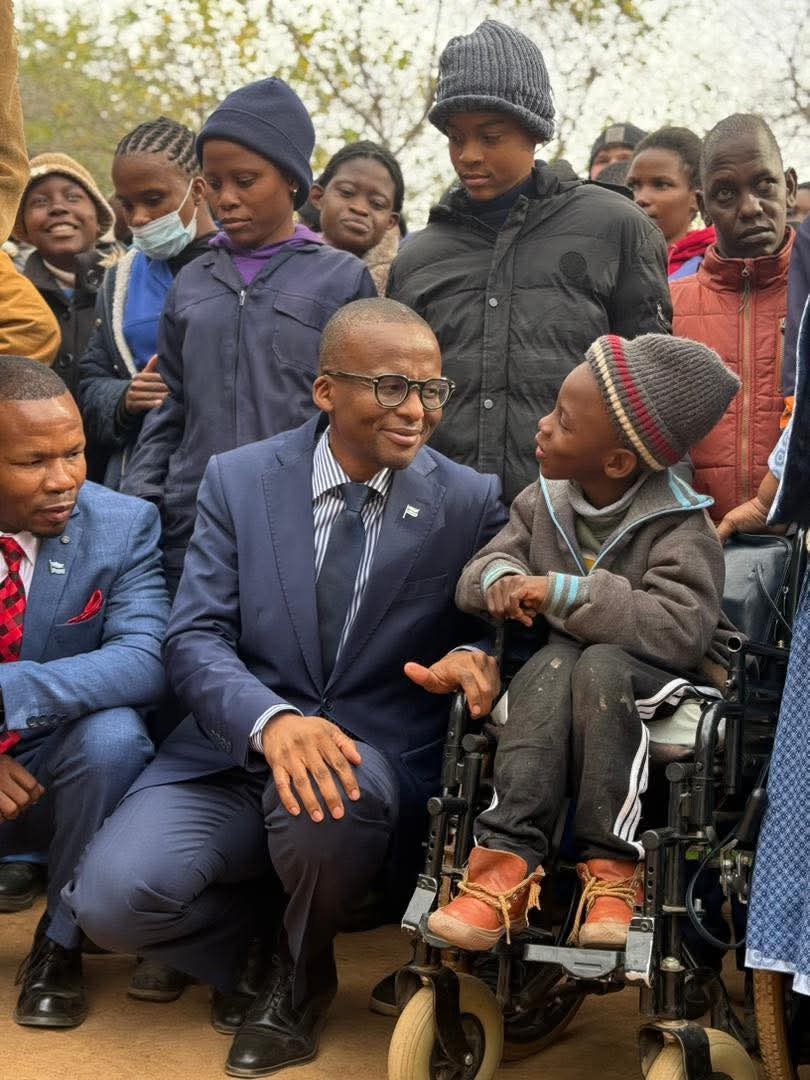
Motse Wa Badiri Training offers a four-year outcome-based education and vocational training
forstudents aged 14 years and above called the Integrated Living and Work Programme (ILWP)
There are currently 106 learners enrolled. The ILWP aims to build a broad foundation of
knowledge and skills that can foster a person’s development across three assessed areas of the
curriculum: Functional skills including communication, literacy, numeracy & ICT, personal &
social development and vocational skills.
Those learners who achieve 40 credits over the four years of study are awarded a level one
certificate.
During the last term of the four-year programme, most of the learners are given the
opportunity to take part in an attachment programme at a workplace situated in their local
community supported by the Employment Support Specialist in accordance with their long- term life goals.
A transition support programme offers support to graduates in finding employment or another
sustainable livelihood.
RECENT DEVELOPMENTS
At Camphill Community Trust we are proud to share an exciting update about the progress of
our Social Enterprises. These include our organic farm, tea garden, garden centre, conference
centre, and distribution centre each serving as an integral part of our community’s social and
economic landscape. Over the past few months, we have undertaken a series of strategic
initiatives to revitalize these enterprises, with the goal of transforming them from a deficit to
cost-covering operations.
New Management and Active Marketing Efforts
A key part of our strategy has been the appointment of new management teams at the Social
Enterprises. With fresh leadership and renewed energy, we’ve focused on streamlining
operations, improving efficiencies, and ensuring each enterprise is better equipped to meet
the needs of our customers and the community.
In addition to the leadership changes, we’ve launched an active marketing drive aimed at
increasing awareness and bringing more customers through the doors. We’re especially
excited about the renewed attention our services are receiving thanks to both local support
and strategic outreach.
The Orchard Restaurant: Now Open
One of the most notable updates is the reopening of The Orchard Restaurant. After a period of
refurbishment, we are thrilled to welcome guests back to this beloved local spot. With a
refreshed menu and a welcoming atmosphere, The Orchard Restaurant is already becoming a
go-to destination for community members looking to enjoy locally grown, organic meals. Securing Funding from Debswana Diamond Company and De Beers
Our efforts have been further bolstered by the generous support from Debswana Diamond
Company and DeBeers. Their recent funding has allowed us to invest in key restaurant
infrastructure improvements and enhance our product offerings. This partnership is a crucial
forstudents aged 14 years and above called the Integrated Living and Work Programme (ILWP)
There are currently 106 learners enrolled. The ILWP aims to build a broad foundation of
knowledge and skills that can foster a person’s development across three assessed areas of the
curriculum: Functional skills including communication, literacy, numeracy & ICT, personal &
social development and vocational skills.
Those learners who achieve 40 credits over the four years of study are awarded a level one
certificate.
During the last term of the four-year programme, most of the learners are given the
opportunity to take part in an attachment programme at a workplace situated in their local
community supported by the Employment Support Specialist in accordance with their long- term life goals.
A transition support programme offers support to graduates in finding employment or another
sustainable livelihood.
RECENT DEVELOPMENTS
At Camphill Community Trust we are proud to share an exciting update about the progress of
our Social Enterprises. These include our organic farm, tea garden, garden centre, conference
centre, and distribution centre each serving as an integral part of our community’s social and
economic landscape. Over the past few months, we have undertaken a series of strategic
initiatives to revitalize these enterprises, with the goal of transforming them from a deficit to
cost-covering operations.
New Management and Active Marketing Efforts
A key part of our strategy has been the appointment of new management teams at the Social
Enterprises. With fresh leadership and renewed energy, we’ve focused on streamlining
operations, improving efficiencies, and ensuring each enterprise is better equipped to meet
the needs of our customers and the community.
In addition to the leadership changes, we’ve launched an active marketing drive aimed at
increasing awareness and bringing more customers through the doors. We’re especially
excited about the renewed attention our services are receiving thanks to both local support
and strategic outreach.
The Orchard Restaurant: Now Open
One of the most notable updates is the reopening of The Orchard Restaurant. After a period of
refurbishment, we are thrilled to welcome guests back to this beloved local spot. With a
refreshed menu and a welcoming atmosphere, The Orchard Restaurant is already becoming a
go-to destination for community members looking to enjoy locally grown, organic meals. Securing Funding from Debswana Diamond Company and De Beers
Our efforts have been further bolstered by the generous support from Debswana Diamond
Company and DeBeers. Their recent funding has allowed us to invest in key restaurant
infrastructure improvements and enhance our product offerings. This partnership is a crucial
step in ensuring the sustainability of our Social Enterprises as we continue to grow and
improve.
Financial Goals: Moving Toward Sustainability
Looking ahead, our primary target is to move these Social Enterprises from a deficit to cost- covering operations within this financial year. This is an ambitious but achievable goal, and we
are committed to reaching it through ongoing operational improvements and growing our
customer base. By the following year, we aim to generate at least a modest surplus, enabling
us to reinvest in the community and further enhance our services.
Securing Funding from Diarough Botswana (Pty) Ltd
Camphill Community Trust Botswana, received a significant contribution from Diarough
Botswana (Pty) Ltd. This funding was specifically allocated for the renovation of the students'
hostels within the community. The renovations aimed to improve the infrastructure and living
spaces, creating a safer and more comfortable environment for the students who reside there.
Camphill Turns 50
The Camphill Community marked a monumental milestone on September 20, 2024,
celebrating its 50th anniversary of supporting individuals with special needs and fostering a
community of care, inclusion, and mutual respect. Founded in 1974, the community has grown
into a beacon of empowerment and compassion, making significant strides in creating a
sustainable, integrated environment where people can thrive.
To commemorate this remarkable achievement, we hosted a grand celebration attended by
over 400 delegates, including community members, supporters, and key stakeholders. The
event was an opportunity to reflect on our history, share future plans, and express gratitude to
the many individuals who have contributed to the success of the Camphill Community.
Graduation
Camphill Community Trust Schools, including Rankoromane School and Motse Wa Badiri
Training, recently celebrated the graduation of 29 students. This milestone marks an important
achievement for the students, who have worked hard to develop both academically and
personally. The graduation ceremony was a proud moment for the entire community,
showcasing the dedication and support of the staff, families, and peers. As these graduates step
into the next phase of their lives, they are equipped with the skills and confidence to face future
challenges and continue their journey of growth and learning with the support from our
transition department.
FINANCIAL POSITION
We are fortunate in that for many years we have received funding from the government to
cover a large portion of our recurrent expenditure. For the past 8 years, however, the annual
grant has been frozen at the same amountsince 2017 while costs have increased with inflation
and modest salary increments. We have also been challenged to admit learners with higher
support needs requiring more staff as well as increased professional support. This is not
sustainable, and we are hopeful that the government will recognise the need for annual
increase in grants to accommodate increasing costs.
We are one of ten NGOs that provide services of education, training, and rehabilitation for
children and young people with learning disabilities and other disabilities that all receive
improve.
Financial Goals: Moving Toward Sustainability
Looking ahead, our primary target is to move these Social Enterprises from a deficit to cost- covering operations within this financial year. This is an ambitious but achievable goal, and we
are committed to reaching it through ongoing operational improvements and growing our
customer base. By the following year, we aim to generate at least a modest surplus, enabling
us to reinvest in the community and further enhance our services.
Securing Funding from Diarough Botswana (Pty) Ltd
Camphill Community Trust Botswana, received a significant contribution from Diarough
Botswana (Pty) Ltd. This funding was specifically allocated for the renovation of the students'
hostels within the community. The renovations aimed to improve the infrastructure and living
spaces, creating a safer and more comfortable environment for the students who reside there.
Camphill Turns 50
The Camphill Community marked a monumental milestone on September 20, 2024,
celebrating its 50th anniversary of supporting individuals with special needs and fostering a
community of care, inclusion, and mutual respect. Founded in 1974, the community has grown
into a beacon of empowerment and compassion, making significant strides in creating a
sustainable, integrated environment where people can thrive.
To commemorate this remarkable achievement, we hosted a grand celebration attended by
over 400 delegates, including community members, supporters, and key stakeholders. The
event was an opportunity to reflect on our history, share future plans, and express gratitude to
the many individuals who have contributed to the success of the Camphill Community.
Graduation
Camphill Community Trust Schools, including Rankoromane School and Motse Wa Badiri
Training, recently celebrated the graduation of 29 students. This milestone marks an important
achievement for the students, who have worked hard to develop both academically and
personally. The graduation ceremony was a proud moment for the entire community,
showcasing the dedication and support of the staff, families, and peers. As these graduates step
into the next phase of their lives, they are equipped with the skills and confidence to face future
challenges and continue their journey of growth and learning with the support from our
transition department.
FINANCIAL POSITION
We are fortunate in that for many years we have received funding from the government to
cover a large portion of our recurrent expenditure. For the past 8 years, however, the annual
grant has been frozen at the same amountsince 2017 while costs have increased with inflation
and modest salary increments. We have also been challenged to admit learners with higher
support needs requiring more staff as well as increased professional support. This is not
sustainable, and we are hopeful that the government will recognise the need for annual
increase in grants to accommodate increasing costs.
We are one of ten NGOs that provide services of education, training, and rehabilitation for
children and young people with learning disabilities and other disabilities that all receive
financial support from the Ministry of Child Welfare and Basic Education. These NGOs are in a
similar position and collaborate through a group called the Disability Education Sub Sector
which is represented by an executive committee.
The ten NGOs are all struggling to keep their programmes going for this financial year. Camphill
employees have had to go through a painful retrenchment exercise in 2023, and we have had
to cut back on basic expenses such as food, household expenses, teaching materials and
others. It is critical that the budgets for the coming financial year include substantial increases
for these NGOs to allow us to return to a sustainable financial position. If this is not achieved, it
is likely that the educational and training programmes will need to be restructured resulting in
reduced levels of service for the children and young people enrolled in our centres.
At a recent workshop with the Ministry of Child Welfare and Basic Education we learned that
due to the current economic challenges in Botswana, grant payments could be at risk, and we
should be prepared to make contingency plans to drastically reduce costs at short notice.
PLANS
We are working hard to make progress with some of new developments that have been in our
strategic plan for several years.
Gala dinner to build classrooms
As we mark 51 years of this life-changing journey, we are launching a bold initiative to raise
funds for the construction of new, safe, and dignified classrooms at a Gala Dinner on the
31 October 2025. Our current facilities can no longer meet the needs of our learners. This is a
call to action for sponsors and partners to join us in creating spaces where every learner can
flourish, that reflect the dignity and potential of those we serve.
Training for learning support and residential support staff
We are developing an accredited Certificate level training for teacher aides, learning support
and residential support staff leading to recognised qualifications. This is not currently available
in Botswana, and it has been identified as a key requirement for the successful implementation
of education policies including the Inclusive Education Policy (IEP) and the Education and
Training Sector Strategic Plan (ETSSP). A pilot training is being implemented in-house to
demonstrate the effectiveness of the programme.
CONCLUSION
The success of these revitalization efforts depends not only on strategic management but also
on the continued support of our local community. We encourage you to visit our enterprises,
experience the products and services we offer, and share your feedback with us. Your
involvement helps us grow, improve, and ultimately become a stronger, more sustainable part
of the local economy.
We are working to resolve this through advocacy efforts and increased fundraising activities.
Our ability to continue to provide quality education and training for children and young people
with disabilities depends on the government providing sustainable financial support.
similar position and collaborate through a group called the Disability Education Sub Sector
which is represented by an executive committee.
The ten NGOs are all struggling to keep their programmes going for this financial year. Camphill
employees have had to go through a painful retrenchment exercise in 2023, and we have had
to cut back on basic expenses such as food, household expenses, teaching materials and
others. It is critical that the budgets for the coming financial year include substantial increases
for these NGOs to allow us to return to a sustainable financial position. If this is not achieved, it
is likely that the educational and training programmes will need to be restructured resulting in
reduced levels of service for the children and young people enrolled in our centres.
At a recent workshop with the Ministry of Child Welfare and Basic Education we learned that
due to the current economic challenges in Botswana, grant payments could be at risk, and we
should be prepared to make contingency plans to drastically reduce costs at short notice.
PLANS
We are working hard to make progress with some of new developments that have been in our
strategic plan for several years.
Gala dinner to build classrooms
As we mark 51 years of this life-changing journey, we are launching a bold initiative to raise
funds for the construction of new, safe, and dignified classrooms at a Gala Dinner on the
31 October 2025. Our current facilities can no longer meet the needs of our learners. This is a
call to action for sponsors and partners to join us in creating spaces where every learner can
flourish, that reflect the dignity and potential of those we serve.
Training for learning support and residential support staff
We are developing an accredited Certificate level training for teacher aides, learning support
and residential support staff leading to recognised qualifications. This is not currently available
in Botswana, and it has been identified as a key requirement for the successful implementation
of education policies including the Inclusive Education Policy (IEP) and the Education and
Training Sector Strategic Plan (ETSSP). A pilot training is being implemented in-house to
demonstrate the effectiveness of the programme.
CONCLUSION
The success of these revitalization efforts depends not only on strategic management but also
on the continued support of our local community. We encourage you to visit our enterprises,
experience the products and services we offer, and share your feedback with us. Your
involvement helps us grow, improve, and ultimately become a stronger, more sustainable part
of the local economy.
We are working to resolve this through advocacy efforts and increased fundraising activities.
Our ability to continue to provide quality education and training for children and young people
with disabilities depends on the government providing sustainable financial support.